Tesamorelin

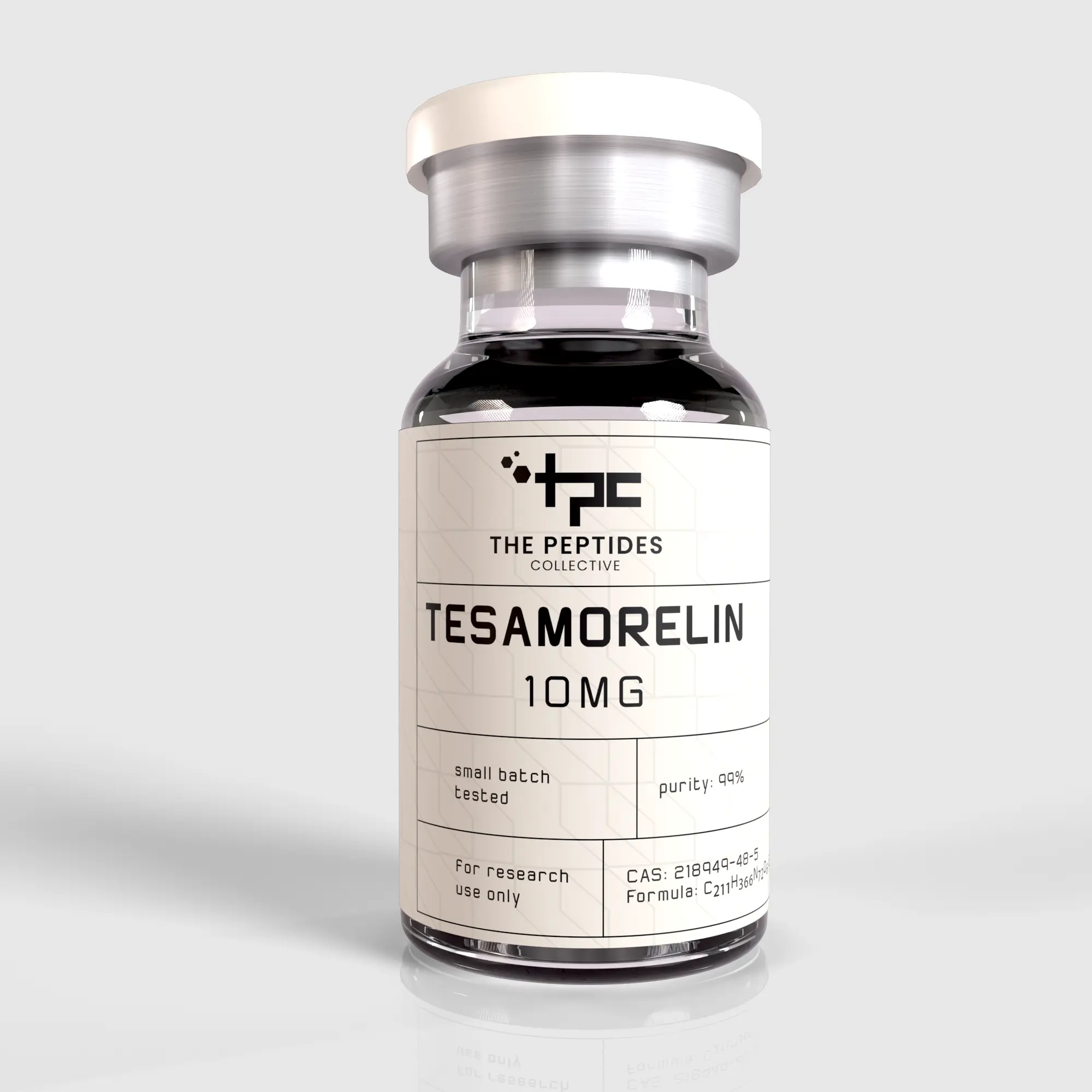
Tesamorelin is a synthetic growth hormone–releasing hormone (GHRH) analog studied for its ability to stimulate endogenous GH secretion, making it a key tool in metabolic and lipodystrophy research. It’s resistance to breakdown allows for more consistent in vitro profiles over time, offering researchers a reliable compound to model long-term GH secretion patterns. What makes Tesamorelin unique is that it’s often studied for its fat-reducing effects, especially around the belly area (visceral fat). It was originally developed for patients with HIV-related fat buildup (FDA approved), but researchers now study it more broadly for how it might support fat loss, cognitive function, and metabolic health. Tesamorelin also helps your body’s system turn up its natural fat-burning and muscle-maintaining processes.

$55.00

Buy Now

Reliable shipping

100% Satisfaction

Money Back Grantee

Easy
Returns

Description

Disclaimer: This is a research chemical only. It’s not a medication, and it’s not approved for human or animal use outside of authorized studies

Sequence H‑Tyr‑Ala‑Asp‑Ala‑Ile‑Phe‑Thr‑Gln‑Ser‑Tyr‑Arg‑Lys‑Val‑Leu‑Ala‑Gln‑Leu‑Ser‑Ala‑Arg‑Lys‑Leu‑Leu‑Gln‑Asp‑Ile‑Leu‑Ser‑Arg‑Arg‑Ser‑Gln‑Asp‑Asp‑Ala‑Ala‑
Gly‑Glu‑Ser‑Gln‑Ala‑Leu‑Arg‑Gly‑Ser‑Gly (human GHRH‑1‑44 with N‑terminal hexenoic acid) (Tesamorelin)
Molecular Formula C₂₂₁H₃₆₆N₇₂O₆₇S
Molecular Weight ~5135.9 Da
PubChem CID 44147413
CAS # 218949‑48‑5


Tesamorelin is a stabilized, synthetic analog of growth hormone–releasing hormone (GHRH), developed to resist enzymatic degradation and extend its half-life in experimental models. It is composed of 44 amino acids and includes a trans-3-hexenoic acid group that enhances stability and bioactivity in vitro.Tesamorelin is studied for its ability to stimulate endogenous GH release through GHRH receptor activation.

Researchers study Tesamorelin because it simulates many of the systemic effects associated with growth hormone elevation—without requiring direct GH administration. Once introduced in experimental models, Tesamorelin stimulates endogenous growth hormone secretion, which subsequently drives increases in insulin-like growth factor 1 (IGF-1). This downstream effect makes it particularly valuable for studies focused on the GH–IGF-1 axis, metabolic signaling, and the interplay between endocrine feedback loops.

Laboratory investigations have centered on Tesamorelin’s potential to influence lipid metabolism, with a focus on reductions in visceral fat and improved insulin sensitivity. Beyond metabolic pathways, its applications extend into models of aging, where it has been explored for cognitive function, neuroprotection, and resilience against age-related decline. Additional lines of research examine its capacity to promote wound healing, tissue repair, and protein synthesis under catabolic stress.

In advanced experimental setups, Tesamorelin is often paired with IGF-1 receptor assays and GH receptor modeling to better characterize its synergistic roles in metabolic regulation. For these reasons, it has become a focal peptide in research exploring endocrine modulation, metabolic disorders, and regenerative biology.

Reviews

There are no reviews yet.

Be the first to review “Tesamorelin”

Your email address will not be published. Required fields are marked *

Related Products

Subscribe for exclusive offers, first access to sales and new releases

Must be 21 years or older and I am a professional researcher and understand
how to properly handle and use these products for research purposes only. I acknowledge
these products are not intended for human consumption.